Winter is coming, and that means your heating bill might start to mount up, but if you’re constantly battling for control of the thermostat, a new gadget is here to help you and your housemates. Say hello to Wristify, a thermoelectric bracelet which is designed to keep your body temperature at an optimal level, meaning you won’t have to hide under blankets in the winter or hog the air-con in the summer. Read on for all the details!
A group of MIT engineering students came up with the new tech, and while it’s currently only a prototype, it’s still still a very promising project. The device monitors air and skin temperature, and will then shoot thermal pulses into your wrist to either cool, or warm you up depending if it’s beach weather or ski season. All it’s down to is small, quick changes in temperature on parts of the body with high blood flow, and that’ll make you feel right at home once the wrist-wear has beamed a thermal pulse.
The wristwatch-looking prototype can be powered for up to eight hours, and it can change the body’s temperature by up to 0.4 degrees Celsius per second. Thanks to the tech, the makers of Wristify scooped the $10,000 (£6,225) first prize at this year’s MADMEC, MIT’s annual materials-science design competition with the intention of using the tech to lower overall costs in buildings that use space heating and cooling. The team thinks that if its Wristify tech can stop even just one building from adjusting its temperature by one degrees Celsius, that would help save around 100 kilowatt-hours per month in costs – not bad for a wearable piece of kit.
Motorola’s hatched a new plan to take on the likes of Apple and Samsung in the smartphone game: let you build your own. Want to add your own screen, own camera, own processor, piece by piece? Soon, you might just be able to thanks to Project Ara.
Motorola today revealed that its Advanced Technology and Projects group has been hard at work on a crazy new concept: a modular smartphone, where separate units piece together to create your own personal, customisable handset.
An endoskeleton holds all the pieces together, but according to the Google-owned mobile company, what goes into each module is up to you, from a new screen to a keyboard, battery or a heart rate monitor.
If it sounds a lot like another recent modular phone campaign, it’s no coincidence. Motorola employees recently met with Dave Hakkens, the creator of the PhoneBloks concept, to work on the project, and plan to engage with the community that’s formed around it to draw on their ideas and flesh it out in the open.
Intrigued? The company will be inviting developers to begin work on modules in a few months, and release a developer kit (MDK) this winter. You can see how it might look in the video below – would you piece together your very own phone like this?
This is an excellent piece regarding to connect a product to the internet or not. Also a lot of strong points on consumer research.
Thanks to widespread Internet adoption and over 10 billion connected devices around the world, companies today are more excited than ever about the Internet of Things. Add in the hype around Google Glass and the Nest Thermostat, and nearly every business, including those from traditionally low–tech industries, wants to get on the cloud, track a group of devices, and gather data. The question, however, is not if a device can be connected, but why the company is connecting a previously "dumb" product to the cloud. Or stated differently, if a company invests in making my toaster talk to my lawnmower, is that really a good business decision and why?
Companies that are successfully adapting and innovating Internet of Things platforms are focused on identifying meaningful opportunities, not just technologies. These opportunities bridge a practical understanding of what embedded computing could potentially do with a clear hypothesis about what will change the game for a large consumer segment or cross–section of industries.
To create successful connected device–based businesses, senior leaders should be prepared to answer three questions that I call the Internet of Why: 1. Why does connecting to the cloud create greater value for the user?
Although the cost of sensors and RFID tags continue to decrease, connecting a previously "dumb" device to the cloud often requires investments in new capabilities and features that must be maintained over time, resulting in a more premium product. The higher price point can be justified only if adding connectivity truly addresses previously unmet customer needs or opportunities. For Philips Hue, an internet–enabled light bulb set, understanding why consumers would want connected lighting was the first major step to building a great platform. In the early phases of the project, the Hue product team identified hundreds of use case scenarios, which were repeatedly explored and tested until four consumer value propositions––ambience creation, security, biological benefits, and gentle reminders––were identified. These value propositions, not the technology itself, established the direction for product development efforts. 2. Why are the connected features on your product roadmap integral to the core experience?
When connecting a product to the web, it can be tempting to build the most ideal user experience that fulfills both the grandest ambitions of discriminating customers and the perfectionist inclinations of the product team. However, creating the ideal takes time and money, and assumptions about perfection will change based on customer feedback. Taking a Lean Startup approach, with an emphasis on just the features that need to be deployed, encourages a more focused first–generation product and faster speed to market.
The team behind the famous Pebble watch, which debuted as a Kickstarter campaign, allowed for prototyping and a limited run of the first–generation device.. After demonstrating the value of the core experience, the Pebble team added meaningful features, like waterproofing and an updated SDK, based on actual feedback from users about what they would pay for. 3. Why does connecting to the cloud enhance your business model?
Connecting products offers the potential to fundamentally shift the revenue and cost dynamics of any business, but embedding connectivity also introduces greater monetization complexity. Whereas an unconnected product might have one revenue stream, a web–enabled product can leverage multiple revenue streams spanning a variety of B2B and B2C customers. The potential for new services––both free and paid––and unique possibilities associated with new data streams makes alignment on a business model even more difficult.
Progressive Insurance's Snapshot program is an example of how dramatically the Internet of Things can transform a traditional business model. In exchange for inserting a telematics device into the car's diagnostic port, Progressive will provide a discounted policy rate based on how an insured motorist actually drives, including how hard he or she brakes and the time of day the car is used. By offering this type of usage–based insurance, Progressive is better able to match insurance premiums to the actual risk profile of individual policy holders, resulting in significantly higher per–policy profitability and improved pricing for safe drivers.
In the age of connected devices, access to technology is no longer a barrier to entry; open–source hardware tools such as Arduino and Raspberry Pi can be purchased for under $35, while software and web services from Amazon are available for pennies per terabyte. Instead, the challenge is to bridge the technology to a larger context and understand why connecting to the cloud creates greater value for the user, product experience, and business model. Companies that are actively addressing this contextual challenge, as opposed to focusing on technology and hype, are having the most success and enabling true differentiation in the connected–products space.
As designers, we all want our designs to last forever but we are also beginning to see what a terrifying world it would be if everything we create really did last forever. The permanence of plastics has gone from a dream to a nightmare where literally everything that we have made out of plastic that hasn’t been recycled or burned will remain in its current state for 1000’s of years. Luckily, there is hope on the horizon in the form of Arboform, a 100% biodegradable thermoplastic made of lignen, the structural part of a plant’s cell wall and a waste product of paper manufacturing.
Plastic Qualities + Wood Properties
Arboform was created by two german scientists, Helmut Nägele and Jürgen Pfitzer in 1996. Through their company Tecnaro, they have created over 900 variations of the material and are continuing to develop more. Arboform comes in pellet, sheet, and stock forms and has been used in the production of designer high heels, speakers and, luxury vehicle interiors. Recently they have developed a version called liquid wood for toymakers and have produced an eco-friendly nativity set just in time for the holidays. Arboform has been used in the production of designer shoes, high end speakers and Tecnaro is currently working with Porsche to create more sustainable vehicle interiors.
The material’s qualities are quite impressive because it marries the structural stability and molding capabilities of thermoplastics with the ecological, acoustic and visual properties of wood into a sustainable and affordable material that outperforms many hydrocarbon polymers (here’s a chart from Tecnaro if you want to get specific).
So maybe instead of our designs lasting forever, Arboform will allow them to return to the Earth from whence they came after they serve their purpose. For more info, be sure to take a look at their Material Overview PDF.
Planes, trains, automobiles, structures, tools, hardware, cameras, machinery, weapons, appliances—these are all things you can design, and they're all things that can rust. The simple curse of the oxidation process has given birth to entire industries that attempt to treat, prevent and halt this damaging process. It's something scientists have been working on with some success but certainly not anywhere close to the scale of what researchers at Rice University are proposing.
You've seen us post about graphene before, and you'll see us post about it again. Because this one-atom thick layer of graphite, which rocked scientists' world more than a decade ago, is the new superstar of material science. It will be everywhere, as ubiquitous as glass or steel, and its uses will be beyond our imagination. But the application for graphene that's currently coming into focus is the prevention of rust.
Scientists at Rice have created "white graphene" using thin sheets of hexagonal boron nitride (h-BN). It's basically a sheet of atoms that look a lot like chicken wire. And it can protect pretty much any material from rusting. It's been tested in temperatures as high as 2,012° F. It's thin, light and invisible. It could be used for anything from delicate electronics or photonics, for example, protecting solar cells from humidity, heat and water.
These "white graphene" sheets were created using a process called chemical vapor deposition. Scientists first grew the material on nickel foil and tested it within an oxygen-rich, super hot environment. Then they grew the h-BN on a layer of graphene and could transfer this combo to copper or steel with perfect results.
Here's a photo of an extreme close up of the before and after applying the h-BN coating.
Incidentally, boron nitride has already proven itself a formidable material as it can soak up pollutants such as oil spills. It can absorb up to 33 times its own weight in oil and solvents. (Typical materials used to soak up oil can only absorb up to ten times their weight.)
Stay tuned for more from the world of graphene, as this material is incredibly strong, light (it's only one atom thick, which makes it essentially two-dimensional!), transparent, and an excellent conductor of electricity and heat. Since 2004, we've seen an explosion of research that has only scratched the surface of potentialuses for graphene.
Allied Electronics (Allied) and RS Components (RS), the trading brands of Electrocomponents plc has introduced DesignSpark Mechanical, a new 3D solid modelling and assembly tool that is available to all -- totally free of charge.
Mark Cundle, Global Head of Technical Marketing at RS Componentsintroduced the DesignSpark Mechanical
The software package is, says RS, free, fast and intuitive, opening new possibilities from concept design through to manufacturing.
Screenshot of DesignSpark Mechanical's user interface (click to enlarge)
Developed in conjunction with SpaceClaim, the new easy-to-use DesignSpark Mechanical is intended to overcome the prohibitive costs and the considerable investment in learning time associated with traditional 3D CAD tools. RS says, its simplicity of use means that engineers and others involved in product development can become fully conversant with the software within minutes, rather than the weeks or months required to become skilled with traditional 3D CAD tools. And it is available in multiple languages.
Direct modelling methodology
DesignSpark Mechanical employs a powerful methodology called 'direct modeling', which is very different from traditional feature- or parametric-based 3D CAD software. The tool uses simple gestures that enable real-time editing and instant feedback, making it possible for engineers and others to create geometry and easily explore ideas and product concepts in 3D.
All basic designs can be achieved quickly and easily via the use of the software's four basic tools – Pull, Move, Fill and Combine – you can quickly create 3D objects, manipulate shapes, grab and drag faces and/or edges, set levels of transparency, and you can also combine/merge objects, fragment them, and perform Boolean operations on them. In addition you can use a few familiar Windows keyboard shortcuts such as cut/paste, undo/redo within a drawing or between drawings.
Online 3D models library
The DesignSpark online component library gives all engineers a free access to more than 38,000 3D models, and each of these free-to-use models is available in 24 different formats. RS Components has also collaborated with world-leading 3D content company TraceParts to provide access to millions of models from the online tracepartsonline.net CAD portal in DesignSpark Mechanical's format.
Exported in STL for 3D printing
3D designs can also be exported in STL, the standard file format to enable rapid prototyping builds and computer-aided manufacturing, in addition to providing the ability to quickly obtain Bill-of-Materials (BOM) quotes via the Allied and RS websites. The tool can also import circuit layout files in IDF format from any PCB design tool.
A decoiler's installation (click to enlarge)
The software can also be used to:
produce highly detailed dimensioned models and assemblies
create professional concept designs to assist in your bids
remove bottlenecks by making amendments and additions to your design in seconds, rather than waiting for the CAD department to rework in history-based CAD tools
combine your creation with off-the-shelf components from RS Components and the Allied Electronics 3D library
DesignSpark Mechanical will be available for free download via its site from 16 September 2013.
The Reece Slide Tap is a different take on the typical slider phone; it is a faucet that uses the innovation of touch-pads to the fullest. You can turn on the tap by simply sliding the top and control the temperature via the touchpad on the handle. You can present the temperature, thus eliminating wastage.
There are three parts on the top of the tap: two touchpads for controlling water and temperature and one screen that shows the temperature. Slide is a 2013 Bathroom Innovation Award finalist.
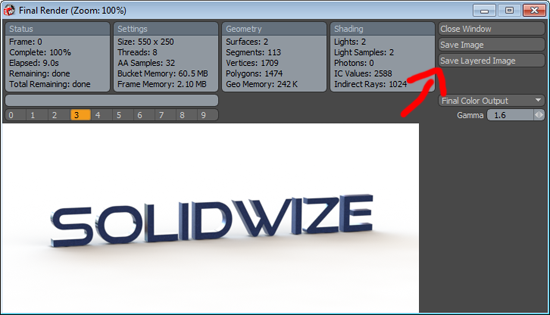
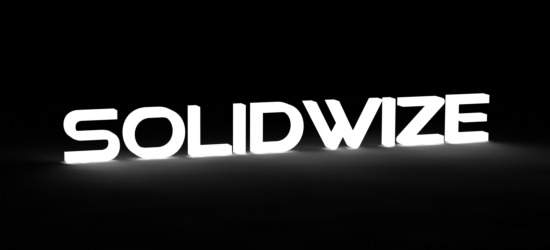
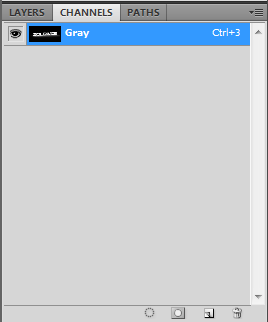
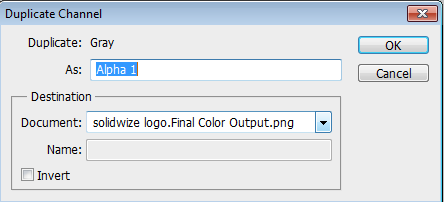
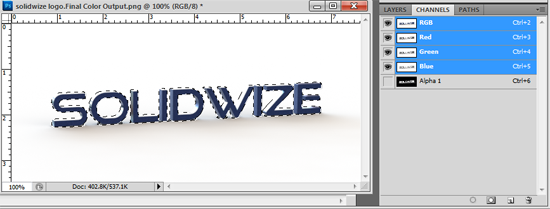
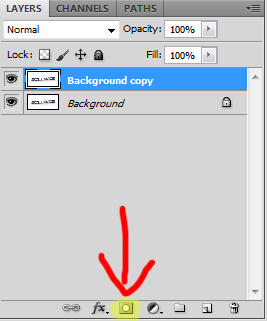
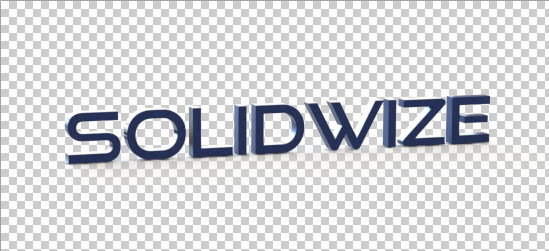
SolidWorks should have added an option to output an image with a transparent background, in Photoview 360. At least Photoview creates an alpha channel that can be saved out along with the colored image. This allows you, if you have Photoshop or a similarly equipped image editing program, to manually remove out the background. This tutorial will go into using the alpha channel to mask out the background of a Photoview render and create a transparent png. The first step is to create your render and save out the layered image. This will create two files an alpha channel and a full color image. The alpha channel will look something like this: You’ll now want to open up the two images in Photoshop and go into the channels tab for the alpha channel image. Right click on the “Gray” channel and choose to duplicate the channel. From the document pull down choose the final color output version and click ok. Go into the final color output’s channels tab and ctrl click the newly duplicated layer. Recheck all of the RGB layers and uncheck the “Gray” layer, so that the full color image is showing. Then go back to the layers tab, right click on the background, and create a duplicate layer as you won’t be able to add a mask to the locked background layer. Create a mask over the background copy by clicking on the icon indicated above. Finally, uncheck the “background” visibility so that you’re left with just the transparent image. Save the image as a png and you’re good to go.